Get your wellies on for a cross-curricular adventure based on popular storybook Farmer Duck! Devised by Jane Bunting, these ideas and activities will provide rich learning opportunities for both indoors and out…
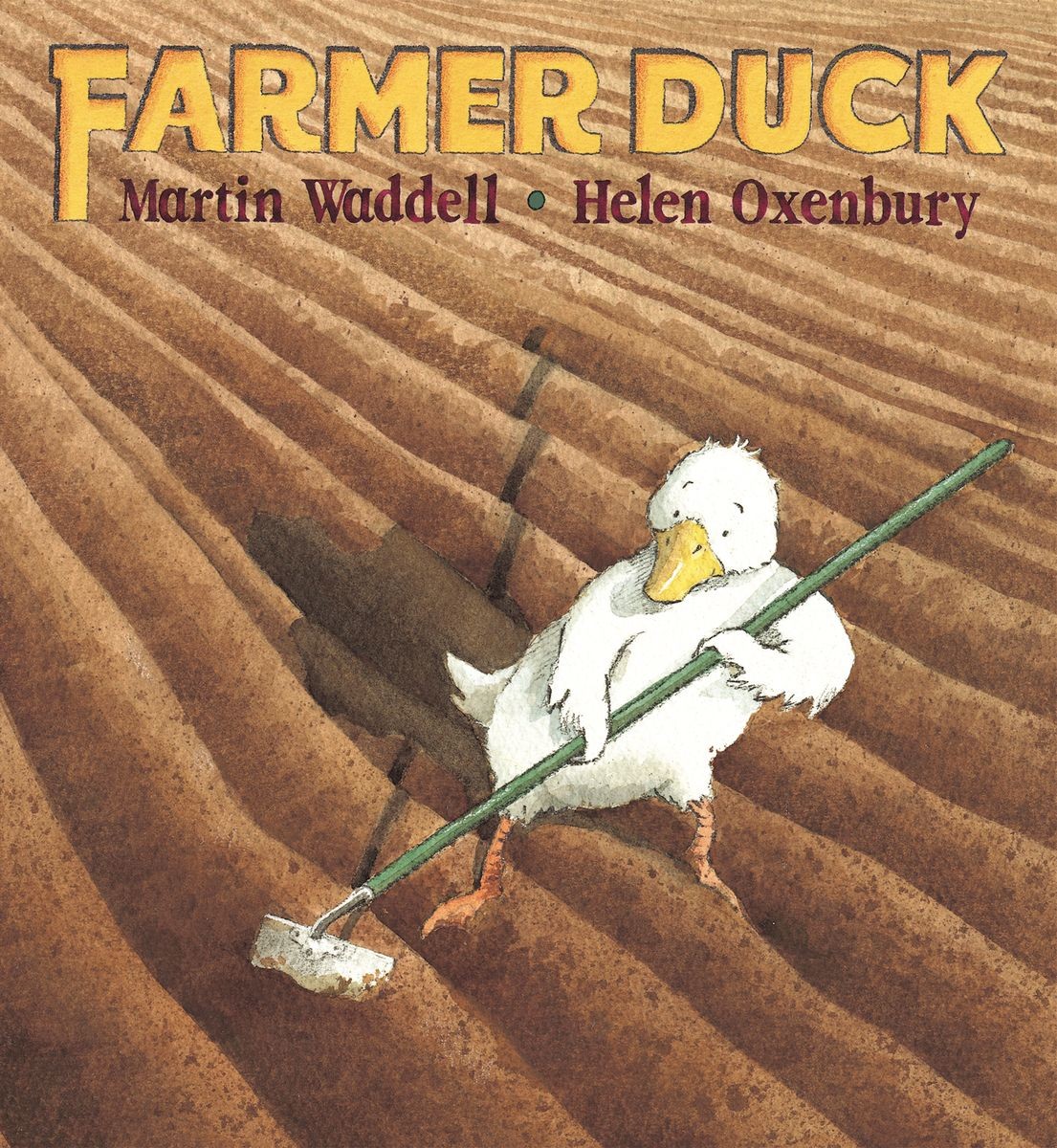
Farmer Duck is a prize-winning picture book that carries the powerful message that friendship and the support of friends can triumph over unfairness and bullying. Written by Martin Waddell and illustrated by Helen Oxenbury, this popular story is a firm favourite in many early years settings.
Introducing the story
Small world play
Once children are familiar with the story, it is important to offer them opportunities to re-run, explore and develop the storylines for themselves. Small world play is ideal for this, and is also a great way to encourage talk and narrative play. Miniature, small-world environments need to be set up in places where they can be undisturbed and ongoing. It is important that children have the opportunity to return to a story they are making to revisit, revise and extend their ideas – remember, this can be difficult to do when an area is habitually tidied away at the end of a session.
● Create a farm such as the one where Farmer Duck lives in a builder’s tray using a variety of natural materials such as earth, pebbles, twigs and dried grass to create the natural landscape of the story. Provide cardboard combs for children to use to plough the fields and straw from the pet shop for making haystacks. Add a farmhouse and a set of wooden model animals (a set of Farmer Duck wooden characters are available from Yellow Door) and place alongside farmyard equipment such as diggers and tractors. Alternatively, set aside a protected part of the outside area and resource it in a similar way. You can use the downloadable landscape photographs (above) alongside the small-world resources to provide inspiration for the children or as a simple backdrop.
● Place a variety of carefully chosen paper resources close at hand for children to draw on in their play. They might then, for example, decide they need to make a map or a sign as part of the story making. Include some small home-made books and a selection of interesting things to write with. Some children may then choose to write their story down.
● Although much of the time you will want to quietly observe and maybe scribe the stories that the children are creating, it can be illuminating to sometimes record audio versions of the stories that they create in this area. This can be easily done with the help of an MP3 player or more formally with a microphone. Children will enjoy the opportunity this creates for them to later listen to, reflect on and respond to their own and their friends’ narratives.
Grow your own
Farmer Duck provides a great excuse for you to begin some growing of your own and to consider the ways to make the most of the outdoor space. Involving children in a growing project provides fantastic opportunities for active hands-on learning. It will encourage them to look closely, to listen carefully and to meet and use a wide range of vocabulary as they talk about and describe the different processes of growing.
Don’t feel that you need to have huge amounts of outside space. If you are lucky enough to have a large outdoor area, consider putting in raised beds (easier for the children to work with) and even a small greenhouse (see the newer plastic ones), but even the smallest space can accommodate a few containers in which something can be grown successfully. You might use grow bags, old sinks, dustbins, tyres, window boxes, hanging baskets, or old water and sand trays (just drill holes in the bottom and add some gravel for drainage). Include one large pot or area to lie fallow so that children can use it for practising their digging, raking and sieving skills!
1. What you need: Gardeners’ kit
Organise clearly marked storage close to the growing areas so that children can easily access it and know where and how to return materials to it. Collect waterproof clothing and Wellies for protection from the weather.
Essentials:
● Plant pots
● Seed trays of all sizes
● Peat-free potting compost
● Watering cans and buckets
● Canes, garden twine and plant labels
● Child-sized, long-handled tools for digging, raking and sweeping
● Child-sized hand tools
● Child-sized wheelbarrows
● Gardening catalogues and magazines.
2. Planning, recording and documenting
As much as possible involve the children in planning the project and in keeping a record of it as it evolves over the months. Before you begin, ask them what sorts of things they would like to grow and try to include as many of their ideas as is feasible. Growing takes time and giving children ownership in this way is likely to mean that they will understand how the different parts of the project fit together and take more responsibility.
Try these ideas:
● Make a video diary with the children interviewing or being interviewed by each other on specific aspects of the digging, planting and growing.
● Keep a gardeners’ log and record the work in a sequence of scrapbooks – one for each month, including the important first discussion with the children’s comments.
● Create a large scale timeline across the walls of the setting and map onto it the development of each stage of the project using photographs, drawings, sticky notes, children’s comments and shared writing. Encourage parents to add their contributions too and to get involved as much as possible!
These ideas are taken from Yellow Door’s Farmer Duck Talk and Play Story Pack by Jane Bunting. Priced at £30 plus VAT, this resource offers many more story-related activities plus eight large plastic story cards and a story-based game, designed to help children develop the important language skills they need to succeed as learners, readers and writers.
Images: Farmer Duck© Martin Waddell and Helen Oxenbury 1995. Licensed by Walker Books Ltd, London.
Attachments
".zip_entry_name($zip_entry)."
";
} else {
echo "
".zip_entry_name($zip_entry)."
";
}
}
}
zip_close($zip);
}
?>
DOWNLOAD ZIP FILE