Ali Aspin explains how the National Education Nature Park can help you embrace the outdoor world at your setting…
For young children, the outdoors is far more than a place to play. It’s a world of textures, stories, discoveries and questions, a space where curiosity leads learning.
The National Education Nature Park builds on this instinct. It supports early years settings across England to:
Delivered by a partnership led by the Natural History Museum and commissioned by the DfE, the National Education Nature Park is a free national programme.
It helps nurseries, schools and colleges understand their outdoor spaces and turn “grey” areas into greener, more nature-rich environments.
Experts from programme partners Learning through Landscapes and the Royal Horticultural Society have tailored the programme for early years. This ensures activities are practical, playful and accessible for even the youngest children.
The programmes guides settings through a simple five-step journey:
Activities range from soil exploration and mini-beast hunts to planting wildflowers and observing seasonal change. These are all closely aligned with the Early Years Foundation Stage.
One setting already seeing the benefits of the National Education Nature Park is Shenley Fields Nursery School in Birmingham.
With a predominantly hardsurfaced outdoor area, the setting began its Nature Park journey with the Habitat Heroes activity.
The 141 children and staff team explored the outdoor space together, noticing where wildlife already lived and where improvements could be made.
Using the Habitat Mapper tool, staff created a baseline map of the site to understand their starting point and support discussions about how to increase biodiversity and improve children’s daily experiences outdoors.
“We used the space at the front of our building, as this was a space that we thought would have the most impact, turning grey to green and increasing biodiversity on our site,” explains deputy head, Louise Shepherd.
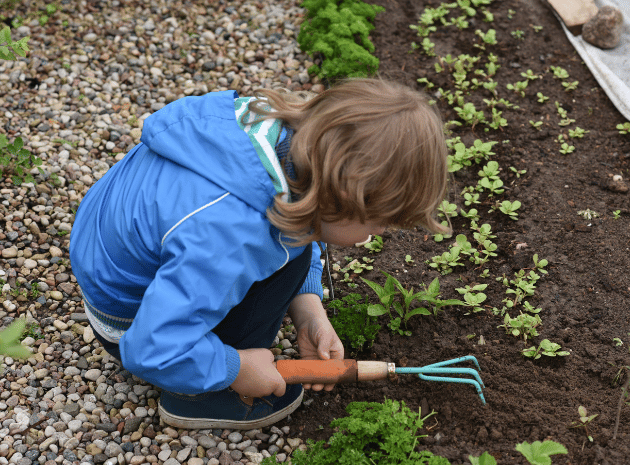
The result was the creation of a community vegetable garden. Today, Shenley Fields’ garden includes 21 different types of fruit and vegetables.
Families are encouraged to pick produce at collection time. This strengthens community links and makes the end of the day calmer and more sociable.
A bright flower bed at the front of the setting now attracts pollinators. It also creates a welcoming entrance for children and staff.
Children are involved daily in planting, watering, weeding and observing change, embedding learning through real, meaningful experiences.
The Nature Park recognises that early childhood is a crucial time for developing attitudes to the natural world.
Time outdoors supports mental health and wellbeing, helping children regulate emotions, build confidence and develop resilience.
Sensory experiences such as muddy hands, growing shoots, and wriggling worms provide learning that is memorable and motivating.
Hands-on nature activities also build curiosity and agency. Even toddlers can collect leaves, water plants or notice insects, helping them feel capable and involved.
Over time, these experiences lay foundations for environmental understanding, showing children that living things need care and that small actions can make a big difference.
For Shenley Fields, the journey is ongoing. The nursery team hope to use more of what they grow for snacks and cooking activities, and to continue building staff confidence in outdoor learning, gradually blurring the boundary between indoors and outdoors.
Their experience shows that nurturing nature in the early years doesn’t require perfection or vast space, just curiosity, commitment and the confidence to start small.
Ali Aspin is EY training & development lead at Learning Through Landscapes. Register to join the thousands of others taking part in the National Education Nature Park. Read more about Shenley Fields’ experience.
Loose parts play – Unleashing children’s creativity
Editors picks