Take your children into the garden this autumn and watch their learning and development flourish, says James Boddey…
Seasonal transitions provide rich, firsthand learning experiences that support children’s development across all seven areas of the Early Years Foundation Stage (EYFS), while also promoting wellbeing, engagement and positive transitions.
For young children, autumn’s changes are easy to observe and deeply meaningful. They invite curiosity, discussion and exploration, helping children make sense of the world around them.
Research consistently highlights the importance of outdoor and nature-based experiences in early childhood, linking them to positive outcomes in physical development, emotional regulation, executive function and language development.
When thoughtfully planned and supported, gardening and nature-based learning can play a central role in highquality early years provision.
Importantly, nature-based learning does not require large outdoor spaces or specialist knowledge. Even smallscale gardening, pots, planters or regular visits to local green spaces can have a significant impact.
These experiences can support children in settling into new routines, forming relationships and developing essential skills across the EYFS.
Outdoor environments differ from indoor spaces: they are dynamic, unpredictable and multisensory. These qualities encourage exploratory play, problem-solving and sustained shared thinking.
This is particularly beneficial for children transitioning into new rooms, routines or settings, as outdoor learning often feels familiar, calming and emotionally regulating.
The EYFS statutory framework emphasises the importance of children exploring, investigating and experiencing the world around them.
Outdoor learning environments are uniquely placed to support this, as they are open-ended and responsive to children’s interests.
Gardening activities also reflect the EYFS principle that children learn best through active engagement. Practitioners can observe children’s schemas, interests and levels of involvement, enabling responsive planning and effective scaffolding.
Access to nature also supports emotional security and wellbeing, both of which underpin effective learning.
Outdoor spaces can provide children with opportunities for movement, quiet reflection and sensory regulation, supporting their ability to engage positively with learning throughout the day.
Autumn gardening may appear quieter than spring planting, but it’s no less valuable. This season focuses on harvesting, observing, preparing soil and planning ahead – all of which align closely with early learning goals.
Children can dig, rake and collect, strengthening gross motor skills while developing coordination and body awareness.
Repetitive actions such as sweeping leaves or filling pots support focus and self-regulation.
Gardening also gives children a strong sense of purpose. Simple responsibilities such as watering, collecting seeds or clearing beds help children feel trusted and capable, supporting self-esteem and independence.
Caring for shared spaces reinforces the idea that their contributions matter.
Physical development is a prime area of the EYFS, recognising its importance in supporting children’s health, independence and readiness for learning.
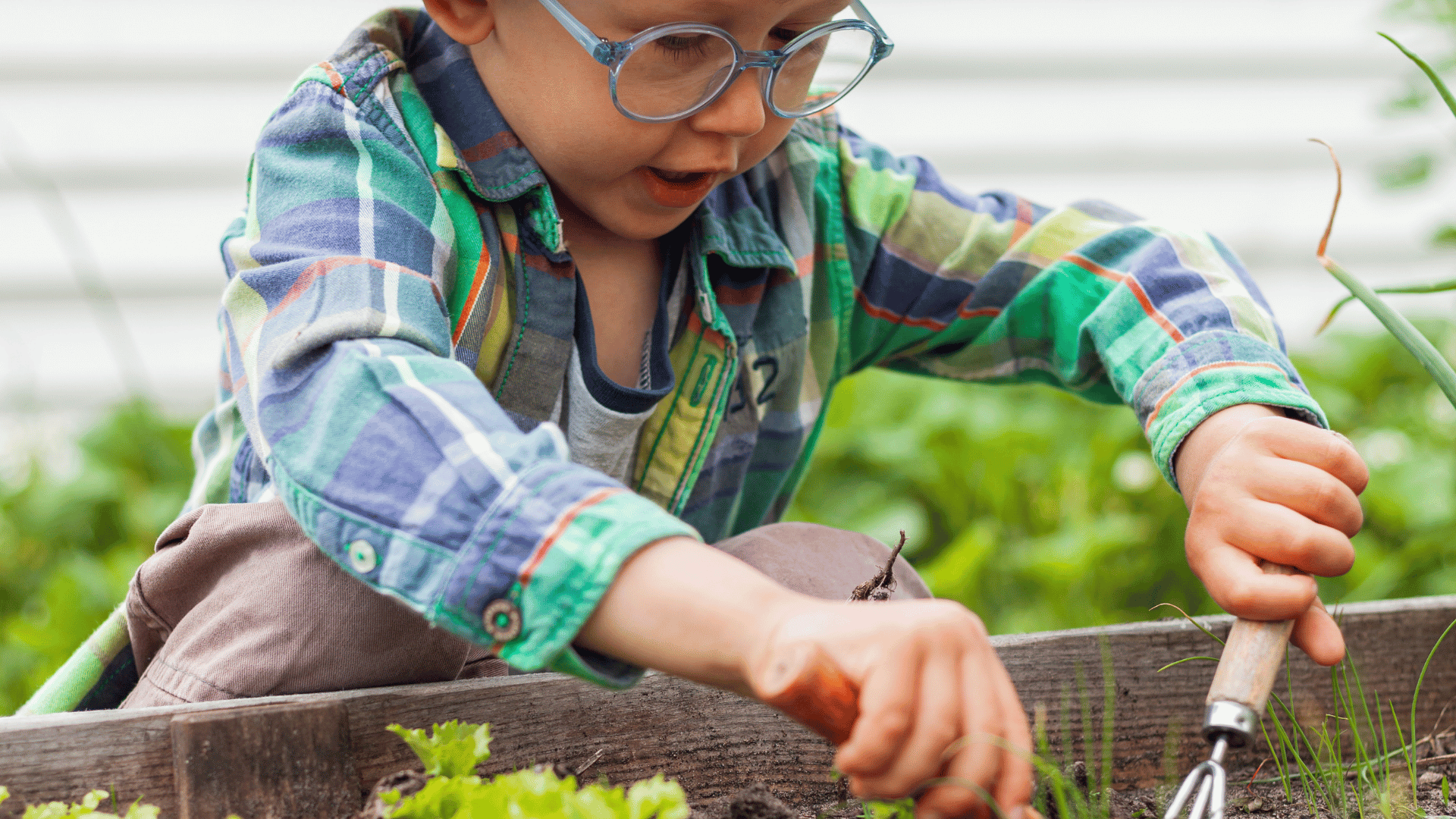
Gardening activities such as digging, lifting watering cans, raking and collecting leaves offer natural opportunities to develop strength, balance and coordination.
Fine motor skills are also developed through tasks such as sorting seeds, planting, using small tools and handling natural materials.
These experiences contribute to children’s control and precision of movement. By modelling safe tool use and supporting children to manage appropriate risk, practitioners promote independence and self-care, as outlined in the physical development early learning goals.
Nature provides a shared, meaningful context for communication. Children are often more verbally engaged during outdoor learning, particularly when activities are collaborative and open-ended.
Gardening naturally invites discussion, questioning and explanation. Autumn is an ideal time to introduce new vocabulary linked to the natural world, for example, harvest, roots, compost, evergreen and deciduous.
Practitioners can model language by narrating actions, asking open-ended questions and encouraging children to describe what they see, hear and feel.
These interactions support both expressive and receptive language development.
Outdoor storytelling can also be highly effective. A garden corner, log circle or grassy area can become a space for shared stories inspired by seasonal changes, supporting listening, attention and imagination.
Nature-based learning has a particularly strong connection to understanding the world. Autumn provides clear, observable examples of change, allowing children to explore concepts such as seasons, growth, decay and life cycles.
Observing plants dying back, collecting seeds and preparing soil encourages early scientific thinking through observation, prediction and comparison.
Gardening also supports children’s understanding of where food comes from and fosters respect for living things.
Activities such as composting and recycling garden waste introduce early ideas about sustainability and environmental responsibility.
These experiences align with the EYFS expectation that children learn best through real, hands-on exploration rather than abstract instruction.
Nature-based experiences are widely recognised for their positive impact on children’s emotional wellbeing.
Outdoor environments can provide a calming influence, which is particularly important in September when children may experience anxiety linked to change and transition.
Gardening promotes cooperation, turn-taking and shared responsibility, supporting the development of social skills and positive relationships.
Caring for plants encourages empathy and patience, while contributing to a shared space fosters a sense of belonging: “This is our garden.”
For some children, outdoor learning reduces barriers to engagement, particularly for those who find structured indoor environments challenging.
Nature offers multiple entry points for learning, supporting inclusion and allowing children to engage in ways that reflect their individual strengths and interests.
You don’t need a dedicated garden to embed nature-based learning. Pots, planters, window boxes or regular visits to local green spaces can be just as effective.
The key is to view outdoor learning as an extension of the learning environment rather than an add-on.
Practitioners should feel confident following children’s interests. A fascination with worms, puddles or falling leaves can lead to meaningful learning across multiple areas of development.
By embracing nature and gardening this September, you can create engaging, meaningful experiences that support children’s learning, wellbeing and connection to the world around them, laying strong foundations for the year ahead.
FIVE THINGS TO TRY IN SEPTEMBER 1 Create a seasonal nature table Invite children to collect leaves, conkers, seed heads and small branches. Use the table for observation, sorting, drawing and vocabulary development. 2 Harvest and taste Involve children in harvesting fruit, vegetables or herbs. Talk about where food comes from and link this to simple cooking or snack preparation. 3 Save seeds for spring Collect seeds from flowers or vegetables and store them in labelled envelopes. This supports understanding of time, growth and future planning. 4 Start a compost bin Add fallen leaves and garden waste to a compost heap or bin. This introduces concepts of recycling, decomposition and caring for the environment. 5 Plan next year’s garden together Use photos, drawings or catalogues to decide what to grow. This encourages communication, decision-making and early mathematical thinking.
James Boddey is an early years consultant and lecturer.