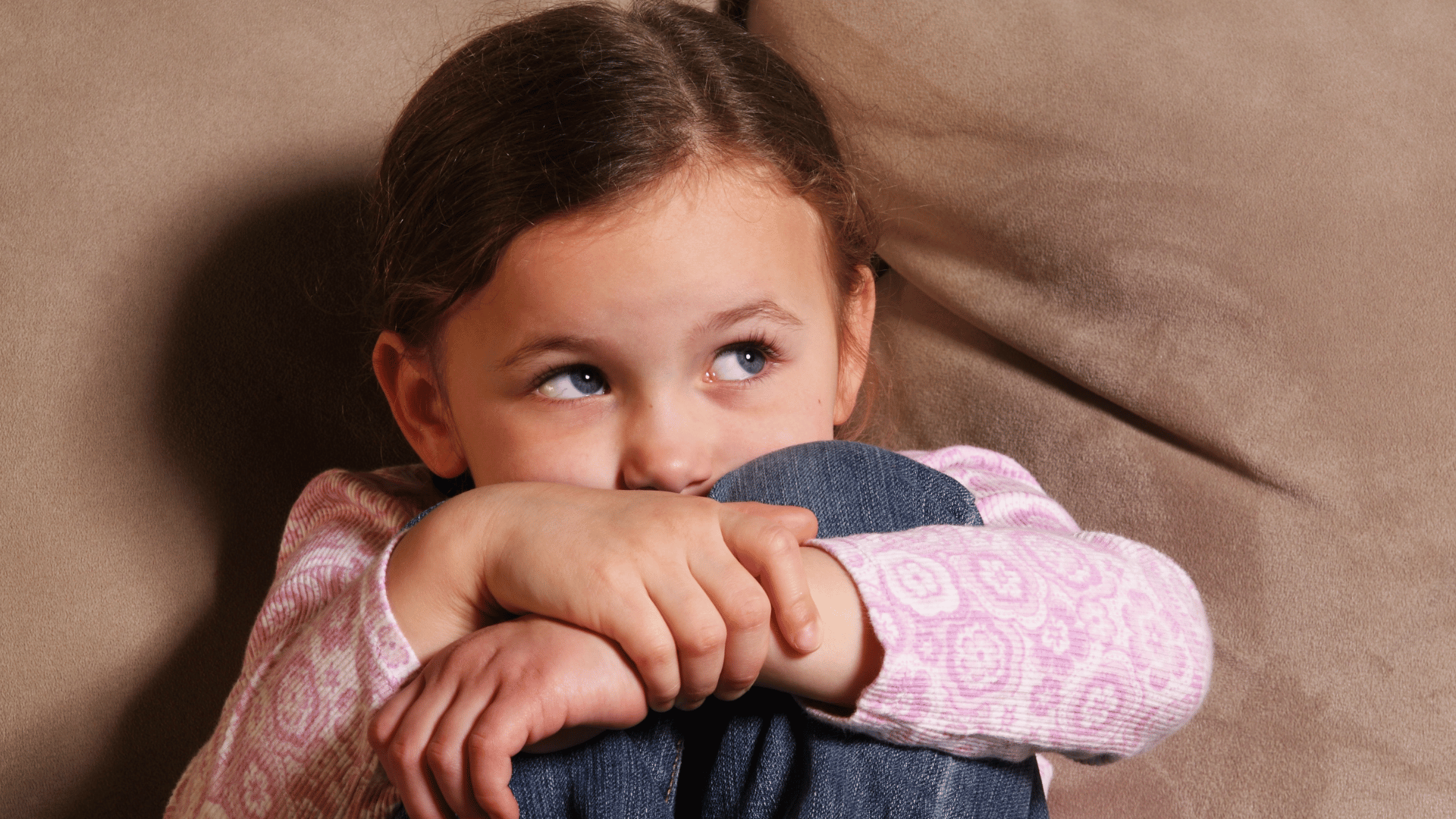
How adults’ fears and anxieties can affect young children, and why creating a sense of safety matters for learning…
There is nothing to fear but fear itself” – that’s the famous quote, isn’t it? Well, I don’t know about you, but I can find plenty of other things to be afraid of.
Had the person who first said that never seen a spider, or been up a long ladder, or found themselves unexpectedly out of their depth in the ocean, or whatever it is that is your personal bête noire?
The trouble is, of course, that fear is catching. I inherited my disabled mother’s understandable terror of being in water, aided and abetted by a primary school teacher pushing me into the deep end of the pool because he thought I was being a wimp!
It’s true I could swim perfectly well, but only with the security of being able to touch the bottom. That’s a powerful metaphor for many anxieties, I think.
Later on in life, when I’d shaken off that fear and turned into a proper water baby, I’m sorry to say that I continued to hold a grain of resentment against my mum for having instilled it in me in the first place.
We all know the importance of modelling and I’m sure each of us endeavours to put forward our best selves in an attempt to give our children a positive role model to learn from, but this becomes much harder when our deep-seated emotions are involved.
Worse still, if your fight-or-flight response is triggered, it makes perfect sense to your brain to behave in a way that you feel protects your charges from the perceived danger.
Unfortunately, this behaviour can put us in the position of my poor old mum, and it doesn’t do our children any favours either.
So we’re in a quandary. It’s almost inhuman to be completely fearless as an adult, so how do we avoid passing on our fears to children, whether it’s a mild discomfort, a justifiable trepidation or a full-blown phobia?
Where possible, such as with something relatively trivial, like a hatred of a particular foodstuff, it’s best to keep it to yourself if you can.
With stronger reactions that are harder to mask, it may be feasible to employ the services of the other staff available to you – especially if they can take over temporarily while you remove yourself from the scene as calmly as you can muster!
This also holds true for those areas where what you feel is not fear exactly, but is a certain level of discomfort, such as when faced with having to lead your children in an activity a little out of your comfort zone.
Lateral thinking can be of help here. Is there someone in class, in school or even within the parent body who would be willing to offer a session to boost the children’s experience in this field?
The most important thing is to avoid implanting a new concern in a child’s mind. These are anxious times and it’s all too easy for little sponge-brained children to pick up on adult worries, internalising them and carrying them forward in their own lives.
Security is everything to the very young and without that feeling of safety, it’s impossible for them to learn anything.
Many years ago, I decided that the differentiation between Us and Them was whether a person believed that fun was our friend and fear the enemy or vice versa.
Sadly our world is firmly in the hands of the latter, but surely childhood should be a time when fun can be our very best friend of all.
It’s up to us all to work to ensure that this is the case for as long a period of time as possible, even if it causes us a little personal uneasiness from time to time.
Nikky Smedley is a writer and educator. Her book, Create, Perform, Teach! is a hands-on guide to using creative and performative methods to deliver the Early Years Foundation Stage.