The early years are the perfect time to teach children about caring for the Earth and help them build a lasting positive relationship with our planet, says Sunil Matta…
Young children are naturally empathetic, curious and eager to help, making the early years the ideal stage to introduce the concept of environmental care in ways that feel safe, hopeful and empowering.
Rather than focusing on large issues, practitioners can support children by helping them connect emotionally with the Earth as something familiar, friendly and worth caring for.
Below are six practical, age-appropriate ideas to try.
Spending time outdoors each day, even briefly, gives children valuable opportunities to notice and connect with nature.
Encourage children to observe leaves, insects, clouds, puddles and changes in the weather. Simple questions such as “What can you see?”, “What’s different today?” or “How does it feel outside?” help children slow down, focus and engage more deeply.
Practitioners can introduce a short, consistent “nature-noticing moment” each day. Over time, this builds familiarity and helps children see the Earth as something they know and care about, rather than something abstract.
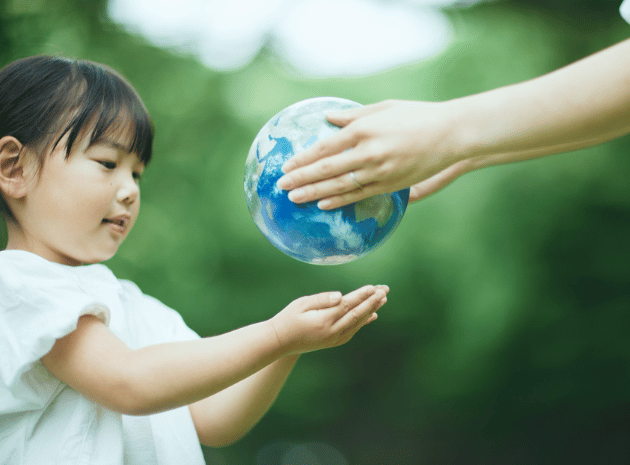
Personifying the Earth can be a powerful way to develop empathy in young children: when our world is described as something that feels happy when cared for, or uncomfortable when it is not, children can better understand why their actions matter.
Using gentle language such as “The Earth feels better when we look after it” supports emotional development without creating fear.
This approach helps children learn kindness and responsibility in a way that’s appropriate for their age.
Stories play a central role in early years learning and are especially effective for exploring environmental themes.
Stories that give the Earth or nature a voice allow children to form emotional connections and understand ideas at a deeper level.
As a children’s author, I have written short stories that use personification to help children feel and understand the impact of everyday actions.
In one example, the Earth feels uncomfortable because water is being wasted. A child notices this, takes simple steps to save water and, in doing so, helps the Earth feel better.
Through storytelling, children learn that even small actions can have a meaningful effect.
Many schools regularly take part in Walk to School initiatives, providing an ideal opportunity to explore environmental care in a meaningful, real-life context.
Walking instead of travelling by car can be introduced as a positive choice that helps the Earth feel healthier and happier.
In one illustrated story from my book, a young character notices that the Earth feels unwell because of pollution from traffic. When he chooses to walk instead, the Earth begins to feel better.
Sharing stories like this allows teachers to open gentle discussions about pollution and clean air in an age-appropriate way, helping children understand how their everyday choices can make a difference.
Environmental care should always feel achievable for young children. Simple actions such as putting litter in the correct bin, turning off taps, reusing materials or caring for plants help them feel capable and involved.
Linking these actions back to caring for the Earth as a friend reinforces understanding, creates a sense of responsibility, and builds habits that can last a lifetime.
Children learn by observing the adults around them. Practitioners can model environmentally friendly behaviour through daily routines, such as switching off lights, reusing resources, walking short distances or caring for outdoor spaces.
Talking through these actions is particularly effective. Explanations like “I’m turning off the light to help the Earth” help children connect actions with outcomes and understand that caring for the environment is something we do every day.
Sunil Matta is the author of Nima & Earthy, a picture book featuring short stories that help young children emotionally connect with the Earth and understand how small, positive actions can help care for the environment.
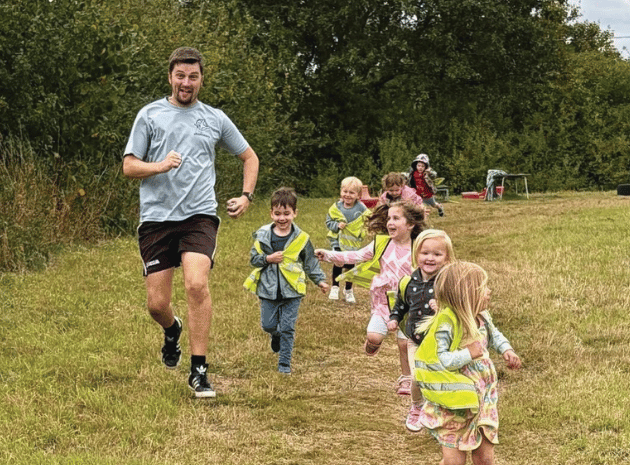
Daily Mile – 15 minutes of physical fun
Editors picks