Nikky Smedley explores how to recognise growth, avoid labels and support development with empathy and humour…
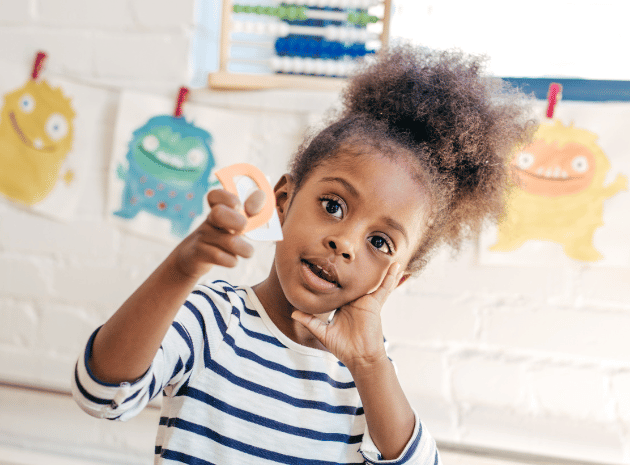
I’ve always enjoyed those occasions when a very earnest four-year-old, or similar, explains to me that they are now too grown-up to watch Teletubbies or some such other pastime that they now deem babyish and below their sophisticated years – if only they knew!
Charming and amusing as it may be for us grownups, every increment of getting older is a serious issue for young children.
I expect you remember the all-important “and a quarter” it was imperative to state when one’s age still languished in single figures.
We should take note of this, and ask ourselves, what is the child actually saying? To my mind, they are laying claim to the business of growth.
They are letting us know that we shouldn’t take for granted that the things they may have enjoyed or revered in the past are still to their taste. They are claiming their right to change.
This may seem an obvious point, but it can be easy to overlook, to forget or even to dismiss.
It’s a question of proportion, of course. To a 30-year-old, three months is a mere 120th of their lived experience, but to a three-year-old, that’s just over eight per cent of their entire lives – no wonder that “and a quarter” matters so much.
The important thing for us is not to get seduced into defining children as extrovert/introvert/bright/slow, etc. – or even attaching behavioural labels such as “doesn’t like to play outdoors” or “finds it hard to make friends” or “hates peas” without reminding ourselves that this may not always be the case.
When we spend a lot of time with a child over a long duration, we can easily fall behind the curve of their ongoing development.
With our less vibrant adult brains we can easily look at that young human in front of us and see the person we knew at the beginning of our relationship with them, or the one from last year, or last week, and not the person who is actually standing there right now, today.
As with so many things it’s about observation, but, helpfully, children are pretty proficient at letting us know what it is they want us to notice – if we are open to receiving the message.
It’s up to us to find ways to show them that we understand and want to encourage them in their personal development.
In some situations this support is more imperative. None of us want to behave in ways that reinforce negative ideas in our children, whether it’s being frightened of the dark or repulsed by pasta.
We can help by reassuring them that although the current feeling or opinion is perfectly valid, it doesn’t have to define them, and they may change their minds in the future.
This approach is much more effective than just telling them not to be silly. It can also be helpful to offer an example – along the lines of, “I hated mushrooms when I was young, but now they’re my favourite vegetable”, or better still, use a story of how one of their peers had a similar turnaround.
Lastly, never underestimate the power of humour in these situations. There is no greater lesson than learning to laugh at oneself and one’s personal mores in order to help dispel such fears, both in the present and the future.
Nikky Smedley is a writer, educator and passionate advocate for the child. Her book Create, Perform, Teach! (Jessica Kingsley Publishers) is available now.
Child reward system – How to motivate children with SEND
Editors picks

Inclusive assessment – How to do it in Early Years
Editors picks
Tips on supporting young children with SEND
Editors picks