Science learning in the early years thrives on environments and materials that spark children’s curiosity and desire to explore, says Kirstine Beeley…
With the early years often operating within different legal frameworks to the rest of a primary school, it’s sometimes difficult for subject leads to understand what their subject looks like in nursery or Reception. These are more play-based and child-led.
As a former science co-ordinator and early years trainer with a degree in primary science education, I understand this issue more than most.
So, let’s explore how science development is interwoven throughout an early years setting. How best can we explain to leaders that it’s not about a series of adult-led “experiments”?
I’ve focused on the four main threads within the science national curriculum in England. This is to illustrate that the foundation years truly are the foundations to scientific learning expected further up the education system.
Although these categories aren’t stand-alone within early curriculums, they are embedded in best practice across the early years board.
Many adults’ experience of science in school centres on “experiments”, with their embedded structure of hypothesis, resources, method, results and conclusion.
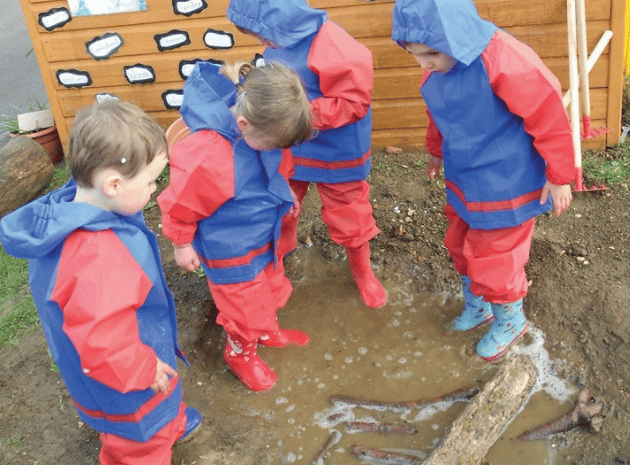
But science in the early years is different. Our play-based, child-led approaches put children at the centre of their own exploration of the world around them. This is without the need for artificially structured activities.
Long gone are the days of “Will it float or will it sink?” questions, as children slowly lose the will to live and dream of the dinosaur world they long to create out in the garden!
Characteristics of effective learning in the EYFS and beyond are rooted in children wanting to ask questions, having ideas, and exploring their own thinking about the environment around them.
With an exciting and engaging setting, they will delve into their natural curiosity. They’ll happily explore and experiment to find their own answers and develop their understanding.
Our role as educators is to create these open-ended environments and encourage children to ask questions about the world we live in.
As well as ensuring that all areas of your environment have maximum science learning potential all the time, you can create an “investigation station” or a “curiosity corner”.
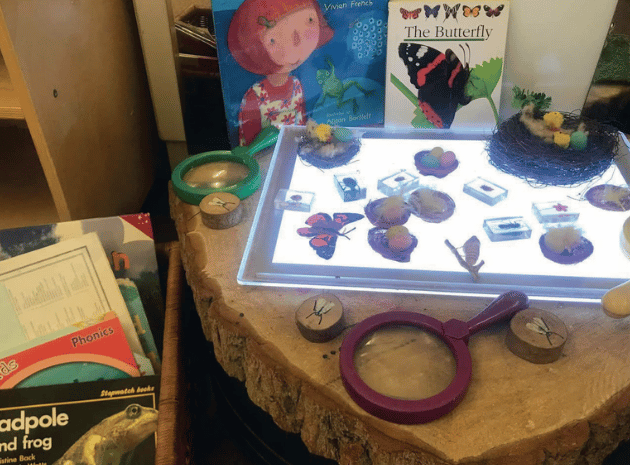
This acts to spark interest and develop children’s confidence to ask questions. Then adults can support and scaffold them in finding their own answers.
Scientific investigation is learning in early years, every day and in every area of provision.
This arm of science in primary education is about children building their awareness of what objects around them are made of and being able to spot that some have amazing propertie. They should begin to understand that some materials work better for certain uses than others.
Making sure that areas of provision give children the opportunity to explore with items made from many materials offers this learning potential as children play and explore.
Ensure your sand area or water play includes access to containers made of wood, metals, and both clear and opaque plastic. This will increase the potential for discussion around materials and their differences.
Metals all feel different at room temperature. Some are much colder to the touch, some are reflective or shiny. Others are rough or dull.
As adults, our role is to act as scaffolders of language as children play, instead of asking “What’s this made of?” every few minutes.
We should also offer environments in which children can explore how to change materials, such as:
We can provide situations daily in which children can explore with all of their senses and see first-hand how materials change.
Providing cardboard tubes alongside the water tray or paper cups within block play allows children to learn that some things work better for certain uses than others.
This really is what it says on the packet. It’s all about developing children’s awareness of all things living, including plants, animals, and us.
In early years, that has to start with providing environments that bring the natural world in. This is so that children can interact with it and explore it as they play.
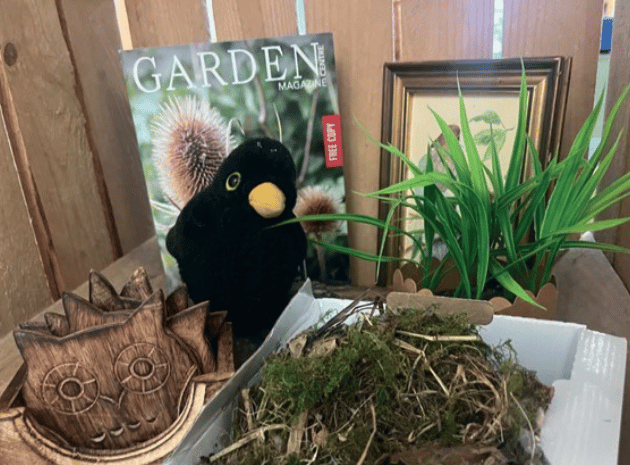
Even in the smallest of urban outdoor spaces, it’s simple to plant up pots with flowers, veg and even small trees to encourage wildlife.
Thinking about the food chain helps when planning. Having plants and flowers that invite pollinators and other creatures will provide a food source for small mammals and birds.
These may, if you’re lucky, tempt larger creatures to your doorstep, such as hedgehogs, foxes and deer.
Don’t forget the ways you can enjoy nature indoors as well. Many plants and flowers are easy to grow and maintain inside.
Adding flowers, petals and leaves to creation stations, playdough or water trays provides countless opportunities to explore and talk about their different parts.
Finally, we need to make sure that as children play and explore, we’re pointing out the changes in their own bodies – for example, when they are out of breath, their heart is pounding, or they are sweating or shivering.
Talking about weather-appropriate clothing and healthy eating is a part of everyday life in early years settings.
We’re lucky in the UK in that we usually experience four very distinct seasons. These bring with them obvious changes to both the natural world and materials around us.
In early years, this element of science learning focuses on pointing out and exploring these changes in the here and now, rather than trying to throw facts at children and hoping some of them will stick.
Use winter to explore actual frost and snow, rather than a perfectly preened tray of fake snow and plastic penguins indoors.
In spring we encourage children to plant seeds and to notice the new leaves, catkins or flowers that appear as the weather becomes warmer.
As with all the other areas of science exploration, this really is about exploring using all of our senses as changes occur and allowing children to make sense of what they experience, rather than a more traditional “teach facts” approach.
In England it’s one of the main reasons the EYFS changed from “Knowledge and understanding of the world” to just “Understanding the world”.
All four of the science elements described here are intertwined. They don’t operate in isolation, and if children are able to explore and be curious in an environment that’s enabled for maximum scientific possibility, learning will come.
Science in early years is not about facts and figures but about questions and the sheer joy of being able to explore to try to find answers.
Science is what we do in early years every day and is at the heart of best practice – even if the children don’t realise it!
Kirstine Beeley is an author, consultant, teacher and former senior lecturer. Her book Science in Early Years is available at playingtolearn.co.uk.