Instead of focusing on the limitations of their space, Louise Wilde and her team changed their approach, creating an outdoor environment that’s making a real impact…
Our school, a primary in Birmingham, didn’t have a field. What it had was blue safety surfacing, a space that wasn’t really being used for anything meaningful, and children who needed more than it was giving them.
The first time one of our nursery children lay flat on their back in The Nest, just looking up at the sky, everything else just stopped. No calling out, no fidgeting, no adult prompting. Just stillness.
This was a child who usually found it hard to regulate, suddenly completely calm in a space that hadn’t even existed just a few months earlier.
This amazing moment didn’t come from a big budget or a perfectly designed outdoor area. It came from doing something different with what we already had.
Like a lot of inner-city schools, our outdoor space wasn’t awful, but it wasn’t doing much either. At the same time, many of our children didn’t have access to outdoor space beyond school – no gardens, limited trips to parks and very little chance to just be in nature.
You could see it in how some children struggled to engage, regulate or sustain interaction.
The Nest came from a simple question: what do our children actually need more of? It wasn’t more equipment. It was something different. And so The Nest was born.
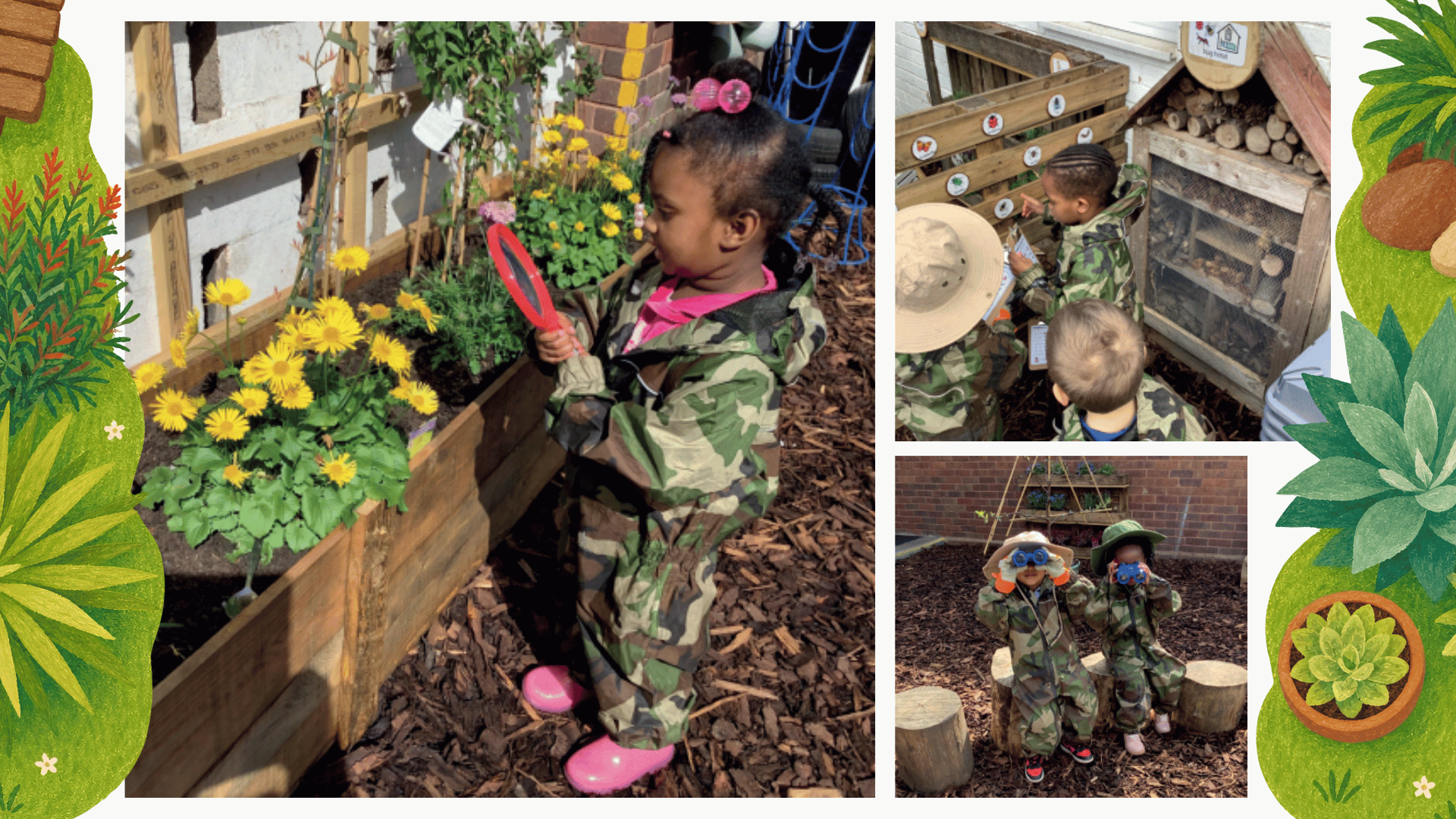
It includes a raised wildlife pond, a bug hotel, a wormery, bird feeders and a bird box with a solar camera so children can observe nature closely.
The space also features a sensory reading nook, mud kitchen, role-play Ranger Station and investigation resources such as magnifiers, identification guides and weathermonitoring equipment to encourage hands-on science and communication.
Natural materials, reclaimed wood, planting and communication boards have been used throughout to create a calm, nature-rich environment that supports curiosity, wellbeing and childled exploration.
Creating The Nest wasn’t about a big transformation overnight. It was built bit by bit, and it’s still changing now.
We used reclaimed materials wherever we could – logs, pallets and natural elements – and focused on building the space up gradually rather than trying to get it done all at once.
A small amount of funding helped us add key features, like a pond, but some of the simplest things have had the biggest impact.
If I’m honest, some of the most expensive equipment we’ve had over the years hasn’t had half the impact.
The biggest challenge wasn’t budget – it was mindset. Shifting thinking from our space as an “outdoor play area” to something that actually supports wellbeing and learning took time.
We also had to be really clear with children about caring for the space: no picking plants, respecting resources, and understanding that this is something we look after together.
The Nest is now part of our daily provision in nursery and Reception, and we’re opening it up more across the school, too.
In early years, it’s where some of the most meaningful moments happen, but not because we’ve planned them that way.
You might see children building a den together, figuring things out without adult input. Another child might be lying quietly, watching the sky, taking a moment to regulate.
Others return to the same spot every day, building familiarity and confidence. One child who rarely spoke during whole-class sessions started returning to the same area each day, just watching at first.
Over time, that turned into single words, then short phrases, then conversations with other children completely on their terms.
For some of our quieter children, this is where their voice comes out more. There’s less pressure and more reason to talk.
Because children are sharing a focus – whether that’s a bug, a plant or a space they’ve built together – conversation happens more naturally, without the pressure of a whole-class setting.
We’ve also built in simple scientific enquiry. That might look like bug hunting, watering plants at the Ranger Station, or noticing what’s changed since yesterday.
It’s not formal; it just happens as part of being out there. Older children now use the space, too – for science, wellbeing, and sometimes just a different way of learning.
For them, this might include using the space to observe habitats, track weather patterns or ask simple questions about what they notice, rather than completing the same learning indoors.
The impact has been hard to ignore. We’re seeing children more engaged, more curious, and more willing to explore.
Communication, especially for quieter children, has improved in a way that feels natural rather than pushed.
For some pupils, this space has become essential for regulation. Instead of trying to manage everything in a busy classroom, they have somewhere to go that genuinely helps them reset.
This isn’t just something we’re seeing in our setting. In places like Finland, where concrete outdoor areas have been transformed into more natural environments, there have been clear benefits for children’s wellbeing, engagement and even physical health.
But you don’t need a huge project to see that kind of impact. For many of our children, this is their only consistent access to this kind of environment.
That makes it more than just an outdoor space; it’s part of how they experience school.
You don’t need acres of land or a big budget to create something meaningful. Start with the space you already have, even if it’s small.
Think about what your children need more of, not what’s missing. Build it slowly. Let it change. Let the children shape it with you.
Because sometimes the most powerful thing we can give children isn’t more structure or more resources. It’s space to breathe, explore… and just be.
Louise Wilde is an early years teacher and forest school lead.
Daily Mile – 15 minutes of physical fun
Editors picks
Hygge in the early years – What it is and how to do it
Editors picks